Research Article
Book Review
Aim & Scope
The journal publishes original research articles that contribute toward Islamic thought and culture principally within the fields of Islamic studies, politics, history, economy, philosophy, sociology, anthropology, history of religions, literature and culture; the journal also publishes research notes, review articles and book reviews as well as symposium reviews and obituaries.
Islamic Sciences, Social Sciences and Humanities
Author Guidelines
Articles should be drafted according to the Centre for Islamic Studies (ISAM)’s style of orthography and bibliography.
Click here for the citation guideline for articles in Turkish.
Click here for the citation guideline for articles in English.
Click here for ISAM’s principles for critical editions.
Ethical Principles and Publication Policy
PUBLICATION ETHICS
İslam Araştırmaları Dergisi meticulously complies with research and publication ethics. The journal has adopted the ethical principles of academic publishing as stated in the open-access guidelines of the Committee on Publication Ethics (COPE): https://publicationethics.org/guidance/Guidelines.
Author
A submitted article should not be published elsewhere and should not include any plagiarism or copyright infringements. The author signs a declaration of originality at the time of submission. The author’s statement is confirmed by ISAM using a special plagiarism program. If a copyright infringement is detected at any stage of review, the process is immediately ceased and the article is returned to its owner. The author is not permitted to submit an article that has been submitted to İslam Araştırmaları Dergisi to any other journal prior to the completion of the reviewing process.
Editor
The editor is responsible for examining submitted articles for both originality and coherence with the publication policies and the format of İslam Araştırmaları Dergisi, and then for proceeding with the process of publication. The editor also coordinates the refereeing and other processes for each article. The editor is responsible for maintaining neutrality and for protecting the anonymity of both the author and the other individuals involved in the reviewing process.
Referee
The referee examines the article free from prejudice and subjectivity, and guided by academic writing criteria and a respect for copyright. Articles are reviewed in respect to scientific quality, consistency, usage of terminology, language, style, and harmony between the title and content. The referee is expected to use clear sentences and to substantiate arguments.
Editorial Board
The editorial board is the committee which determines publication policies for İslam Araştırmaları Dergisi. All members except for those with justified excuses participate in board meetings and deliver opinions via e-mail when necessary. The editorial board decides to approve or reject submitted articles based on referees’ reviews and authors’ responses. The editorial board also decides in which issue an approved article is placed.
Advisory Board
The advisory board oversees the general direction of the journal and offers guidance related to publication policies. Advisory board members can express their ideas in writing or they may participate in a meeting when called for by the chief editor.
PUBLICATION POLICY
As a journal with the mission of contributing high-quality academic material, spreading academic knowledge and making it accessible to all parts of the society, İslam Araştırmaları Dergisi maintains an open-access policy. All materials published in the journal are accessible, free of charge, through the journal’s website. All materials can be downloaded without a membership or payment. No fee is expected from authors for any reason.
Price Policy
Dergimizde makale gönderim ücreti alınmamaktadır.


Journal Boards
EDİTÖRLER KURULU


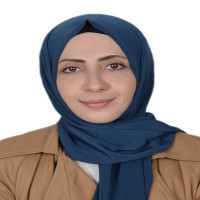



She was born in 1998 in Midyat, Mardin. She completed her secondary education at Midyat Anatolian High School in 2016 and graduated from Marmara University Faculty of Theology (Arabic Program) in 2021. In 2024, she completed her master’s thesis entitled “Mamluk Madrasas in Cairo” at the Department of Islamic History and Arts, Institute of Social Sciences, Marmara University. Between 2021 and 2023, she worked at the Encyclopedia Coordination Office of the Center for Islamic Studies (İSAM). In 2023, she was appointed as a research assistant at the Department of Islamic History and Arts, Faculty of Theology, Süleyman Demirel University. Since February 2025, she has been pursuing her doctoral studies at the same department.

YAYIN KURULU
Cemil Aydin is professor of international/global history at the University of North Carolina-Chapel Hill’s Department of History. He studied at Boğaziçi University, İstanbul University, and the University of Tokyo before receiving his Ph.D. degree at Harvard University in 2002. He was an Academy Scholar at the Harvard Academy for International and Area Studies (2002-2004), and a Mellon Foundation post-doctoral fellow at Princeton University’s Department of Near Eastern Studies (2007-2008).
Cemil Aydin’s publications include his book on the Politics of Anti-Westernism in Asia (Columbia University Press, 2007) and The Idea of the Muslim World: A Global Intellectual History (Harvard University Press, Spring 2017). His writings on the political history of the world in the long 19th century was published from Harvard University Press in 2018 as part of an edited volume An Emerging Modern World: 1750–1870 (2018) He currently serves as the co-editor of Columbia University Press book series on International and Global History, and editorial board member of Modern Intellectual History journal.
EDUCATION & DEGREES
Harvard University, Ph.D. in History and Middle Eastern Studies, November 2002
• Dissertation: “The Politics of Civilizational Identities: Asia, West and Islam in the Pan-Asianist Thought of Ôkawa Shûmei”
• Dissertation Committee: Cemal Kafadar, Andrew Gordon and Akira Iriye
• General Examination Fields: Ottoman/Turkish History (Cemal Kafadar), Arabic Language and Civilization (William Granara), Japanese History (Andrew Gordon), Modern German History (David Blackbourn)
• M.A. in Middle Eastern Studies, 1997
The University of Tokyo, 1997-1999
• Visiting Research Student and Monbusho Fellow
Istanbul University, M.A. in History of Ottoman Science, July 1995
• Ottoman Intellectual History
• Thesis: “The Crisis of Civilizationism as an Ottoman Reform Ideology: A Study on the Mecmua-i Fünun (1863-1866) and Mecmua-i Ulum (1877-1878) Journals,” Adviser: Professor Ekmeleddin İhsanoğlu
Institute of Islamic Thought & Civilization, Malaysia, M. A. coursework, September 1991-June 1992
• Legacy of Early Islamic Theology & Philosophy in the Modern Period
Boğaziçi University, Istanbul, B.A. in Political Science & International Relations, June 1991
PROFESSIONAL EXPERIENCE
Associate to Full Professor of History, University of North Carolina-Chapel Hill (January 2012-July 2017)
IIIT Chair in Islamic Studies and Associate Professor of History, George Mason University, Department of History and Art History (August 2009-December 2011)
Founding Director, Ali Vurak Ak Center for Global Islamic Studies at George Mason University (October 2009-December 2011)
Assistant to Associate Professor of History, University of North Carolina-Charlotte, Department of History (August 2004-June 2009)
Post-Doctoral Fellow, Princeton University, Near Eastern Studies Department (September 2007-August 2008)
Academy Scholar, Harvard Academy for International and Area Studies (October 2002-December 2003)
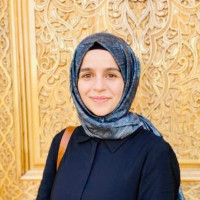

1966’da Karadeniz Ereğli’de doğdu. Karadeniz Ereğli Anadolu Lisesi’ni bitirdi. 1992’de Boğaziçi Üniversitesi Siyaset Bilimi ve Uluslararası İlişkiler, ve Tarih Bölüm’lerinden mezun oldu. 2005’de Harvard Üniversitesi Tarih ve Ortadoğu Çalışmaları Bölümü’nden doktora derecesini aldı. 2005-2008 Stanford Üniversitesi’nde, 2010’da Internationales Forschungszentrum Kulturwissenschaften, Vienna’da misafir araştırmacı olarak bulundu. 2009-2012 Güney Florida Üniversitesi Tarih bölümünde asistan profesör olarak çalıştı. 2012-2023, aralıklı olarak, George Mason Üniversitesi, Ali Vural Ak Küresel İslam Araştırmaları Merkezi direktörlüğü yaptı. Halen aynı üniversitenin Tarih ve Sanat Tarihi Bölümü’nde Doçent Dr. olarak görev yapmaktadır. Yerli ve yabancı dergilerde ve derleme kitaplarda yayınlanmış çok sayıda makelesi vardır.

Mutaz al-Khatib is an Associate Professor of Methodology and Ethics at the Research Centre for Islamic Legislation and Ethics (CILE), Hamad Bin Khalifa University (HBKU). He also serves as the director of the MA program in Applied Islamic Ethics at the College of Islamic Studies (HBKU) and as editor-in-chief of the Studies in Islamic Ethics book series published by Brill. In addition to numerous refereed articles, he has authored and edited several books, including: Radd al-Ḥadīth min Jihat al-Matn: Dirāsa fī Manāhij al-Muḥaddithīn wa-l-Uṣūliyyīn (Matn Criticism: A Study of the Methods of Traditionists and Jurists, 2011), Maʾziq al-Dawla bayna al-Islāmiyyīn wa-l-ʿAlmāniyyīn (The Dilemma of the State Between Islamists and Secularists, 2016), al-ʿUnf al-Mustabāḥ: al-Sharīʿa fī Muwājahat al-Umma wa-l-Dawla (Violence Made Permissible: ‘Sharia’ Versus the People and the State, 2017), Qabūl al-Ḥadīth (The Accepted Ḥadīth, 2017), Islamic Ethics and the Trusteeship Paradigm (co-editor, 2020), Ḥadīth and Ethics Through the Lens of Interdisciplinarity (2023), and Key Classical Works on Islamic Ethics (2024).
